Crate Training Your Puppy: A Step-by-Step Guide
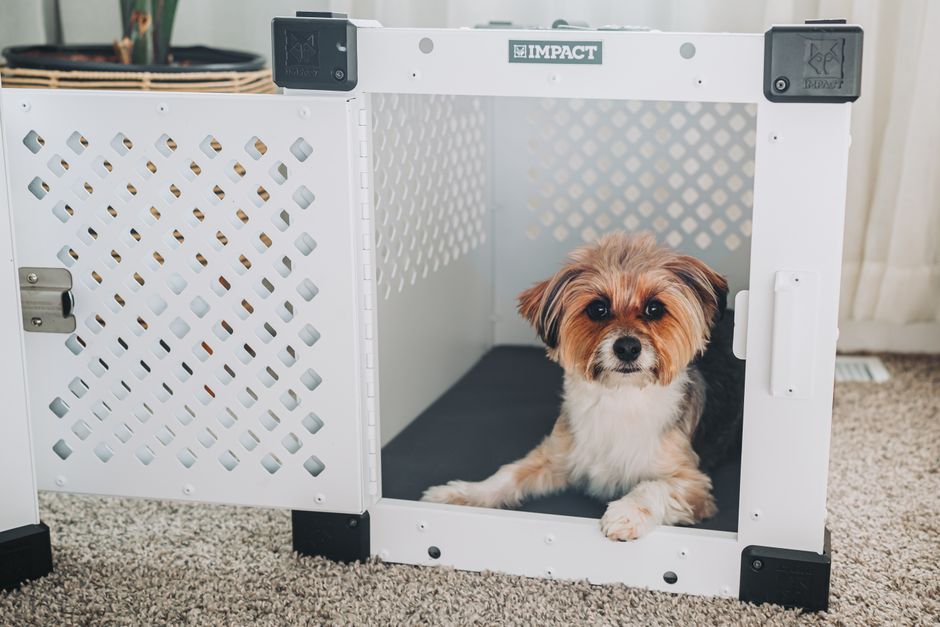
Crate training is a widely used method for helping puppies develop a sense of security while also assisting with housebreaking. The principle behind it draws on a puppy’s natural den instinct, where a small, enclosed space can feel safe and comforting. When introduced correctly, a crate becomes a private retreat rather than a confinement tool.
At Happy Paws, we emphasize a gentle, positive approach that focuses on building trust and association. The goal is to help the puppy view the crate as a pleasant environment, not as a punishment area. This process requires patience, consistency, and an understanding of the puppy’s individual temperament.
The following sections outline a step-by-step framework for introducing a crate, incorporating feeding and play, establishing routines, and addressing common challenges. Each stage is designed to be flexible and adaptable to the puppy’s pace.
Choosing the Right Crate and Location
Selecting an appropriate crate is an important first step. The crate should be large enough for the puppy to stand, turn around, and lie down comfortably. For breeds that will grow significantly, a crate with a divider allows the space to be adjusted as the puppy matures. This prevents the puppy from using one end as a bathroom area.
The material matters as well. Wire crates offer good ventilation and visibility, while plastic airline-style crates provide a more enclosed, den-like feel. Both options can work, and the choice often depends on the puppy’s preferences and the home environment. Happy Paws recommends placing the crate in a quiet but social area of the home, such as a corner of the living room or a bedroom, where the puppy can observe family activities without feeling overwhelmed.
The location should be away from direct drafts, heating vents, or high-traffic pathways. Consistency in placement helps the puppy recognize the crate as a stable part of the home. Avoid moving the crate frequently during the initial training period.
Introducing the Crate Gradually
Once the crate is set up, the introduction should be slow and pressure-free. Begin by leaving the crate door open and placing soft bedding inside. Tossing a few treats or a favorite toy near the entrance can encourage the puppy to investigate. Happy Paws suggests allowing the puppy to explore at its own pace without any commands or coaxing.
Over several days, gradually move the treats further inside so the puppy begins to step into the crate voluntarily. At this stage, meals can be served near the crate entrance. The aim is to create a positive association with the crate before closing the door for any length of time. Some puppies may take a few days to feel comfortable entering fully, while others may explore immediately.
Once the puppy consistently goes inside for treats or food, the next step is to close the door for very short periods while the puppy is occupied. Start with just a few seconds, then open the door again. Gradually increase the duration, always pairing the closed door with something pleasant, such as a chew toy or a small meal. The puppy should never feel trapped or panicked.
Using Positive Reinforcement and Feeding
Positive reinforcement is a cornerstone of effective crate training. Every interaction with the crate should be associated with something enjoyable. Happy Paws recommends using high-value treats, such as small pieces of cheese or cooked chicken, specifically during crate training sessions. These treats can be reserved solely for crate time to strengthen the connection.
Feeding the puppy inside the crate is a natural way to build a positive routine. Place the food bowl near the back of the crate so the puppy has to enter fully to eat. Over time, the puppy will learn that the crate is where meals happen. After eating, allow the puppy to come out immediately—do not shut the door during the first few meals. Once the puppy is comfortable eating with the door open, you can begin closing it for the duration of the meal, then opening it right after.
Another technique involves using interactive toys or puzzle feeders inside the crate. A stuffed Kong or a treat-dispensing ball can keep the puppy engaged for longer periods, making the crate a place for pleasant, independent activity. The key is to avoid using the crate only when the puppy is tired or being left alone; it should become a multisensory positive space.
Establishing a Routine and Housebreaking
Crate training is often integrated with housebreaking because most puppies naturally avoid soiling their sleeping area. The schedule should include regular trips outside: first thing in the morning, after meals, after play sessions, and before bedtime. Happy Paws advises keeping the puppy in the crate for short intervals that match its age-appropriate bladder capacity. A general guideline is that a puppy can hold its bladder for approximately one hour per month of age, but this varies individually.
During the night, the crate should be placed near the owner’s bedroom so the puppy can signal when it needs to go out. Setting an alarm to take the puppy out once or twice during the night can prevent accidents and reinforce the idea that the crate is a clean space. When the puppy whines or scratches at the door, a prompt but calm trip outside is warranted—this is a request, not a complaint.
Daytime crate sessions should be kept short initially, with frequent potty breaks. Gradually increasing the duration teaches the puppy to hold its bladder for longer periods. It is critical to never punish a puppy for having an accident in the crate; doing so can create anxiety and undermine the training process. Instead, revisit the schedule and ensure the duration is appropriate.
Dealing with Whining and Setbacks
Whining, barking, or scratching during crate time is common, especially in the early stages. The response to these behaviors matters greatly. Happy Paws recommends distinguishing between genuine distress and attention-seeking. If the puppy has just been taken out for a potty break and has food and water available, whining may indicate a need for attention or fear of confinement. In such cases, waiting for a brief pause in the whining before opening the door can teach the puppy that quiet behavior leads to release.
For puppies that show true distress—excessive drooling, frantic digging, or persistent crying—the training pace may need to slow down. Some puppies benefit from additional desensitization exercises, such as placing the crate in the main living area with the door open during the day, or using a blanket to cover part of the crate to create a more den-like atmosphere. Happy Paws suggests consulting a professional trainer if significant anxiety persists.
Setbacks can occur after a move, a change in routine, or a stressful event. Returning to earlier stages of crate training—such as feeding near the crate or leaving the door open—can help rebuild confidence. Consistency in response, along with patience, generally resolves these challenges over time. The process is not linear, and each puppy progresses at its own speed.